

 Apple Podcasts

 Spotify

 Pandora

 Castro

 iHeartRadio

 Amazon Music

 RSS Feed

 YouTube
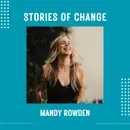
Rediscover Your Creativity with Mandy Rowden, Founder of Girl Guitar
Is there something creative you keep putting off because you don’t think you’re good enough—or life keeps getting in the way?
For me, one of those things has been playing guitar. I’ve played off and on for years. That got me thinking about why we sometimes need permission to do something we enjoy.
Singer-songwriter and entrepreneur Mandy Rowden knows that hesitation well. After burning out and returning to Austin from New York, she needed to pay her phone bill. She put together a six-week guitar class for eight women. What happened in that room became Girl Guitar.
Mandy joins me to talk about making mistakes and helping adults try things they never thought they could do. We talk about songwriting as a way to process life. She also tells us about her plans to preserve the stories of Texas women songwriters. Bonus: She shares one of her original songs with us - it's fantastic!
Questions We Explore
How did Mandy Rowden start Girl Guitar?
She organized a small women’s guitar class to cover her phone bill. The women wanted to keep meeting and the classes expanded into songwriting and bands.
Do you need natural talent to learn guitar as an adult?
Mandy challenges the idea that struggling at first means music isn’t for you. She reminds students that experienced musicians also practice and made mistakes.
How can a supportive group help you build confidence?
Mandy describes students who initially refuse to perform but eventually take part in a showcase. For her, the important moment is when they realize they did something they thought they couldn’t do—it builds confidence.
About the Guest
Mandy Rowden is a singer-songwriter and founder of Girl Guitar and the Texas Women Songwriters Festival. She's also a lecturer at Texas State University.
Listen and Connect
Mandy Rowden — music and more
Girl Guitar — classes and community
Texas Women Songwriters Festival
Peace Where I used to Have None by Mandy Rowden. Used with permission.
Stories of Change: Helping You Navigate What’s Next
Hosted by Judy Oskam
Navigating a change or wondering what comes next? Hear real stories from people who have faced unexpected turns, made important choices, and figured things out along the way.
A little wisdom to help you find your own way forward.
Explore more at StoriesofChangePodcast.com.
00:00 - Judy’s Guitar And Why Creativity Waits
01:15 - Mandy’s Sheltered Musical Beginnings
04:08 - An Accidental Start For Girl Guitar
07:55 - Normalizing Mistakes And Practice
11:05 - Songwriting As A Safe Outlet
13:04 - Showcases That Turn Fear Into Power
17:04 - Permission And Community To Create
18:58 - Building The Texas Women Songwriters Future
19:54 - Final Encouragement And Judy’s Takeaways
22:00 - Peace Where I used to Have None by Mandy Rowden (used with permission)
Judy’s Guitar And Why Creativity Waits
Judy Oskam
You're listening to Mandy Rowden's “Peace Where I Used to Have None,” used with her permission. You'll hear more of the song of the song after our conversation
Judy Oskam
.Do you ever have something you love doing, but somehow it keeps getting pushed aside? Well, for me, one of those things is playing the guitar. I played off and on for years. I'm mostly a chord girl. I know a few chords and love just sitting down and playing. But lately I've been thinking about doing more with my guitar. I've even kind of brought it into the podcast a little bit. You'll hear it in some of the episodes. But it's got me thinking about how often we put things aside because life just gets busy or things get in the way. Today's guest knows a lot about helping people rediscover their creativity. Mandy Rowden is a singer, songwriter, founder of Girl Guitar, and the Texas Women's Songwriters Festival. And she's a lecturer at Texas State. Through her music and her work with other musicians, she's helping people find their voices and discover what they're capable of. I'm Judy Oskam, and this is Stories of Change, Helping You Navigate What's Next. Mandy, I've been thinking about my own relationship with music, and I'm curious about yours. Take me back. What how did music become such an important part of your life? And was there one moment when you decided to see where you could
Mandy’s Sheltered Musical Beginnings
Judy Oskam
go with it?
Mandy Rowden
You know, I was raised very religiously, arguably in a cult, um homeschooled. And in this particular brand of religious craziness, um, it was very important that the kids learn music, specifically classical music. Um, and the fact that I was homeschooled and we lived out in the country and really weren't, you know, uh weren't around a lot of people, just meant that out of boredom and loneliness and whatever, I really threw myself into playing violin and piano. Um and I I remember very clearly from about the age of six, just knowing that this is all I cared about. Um not having any clear idea of what this might look like as a career or whatever, because I was six, but knowing that this was that this was kind of it. Um we were kind of forbidden from being around anything secular, music-wise. And so um it was gospel and classical. That was all there really was. And this was all pre-internet, and again, not being in in a school system and around outside influences, I was really truly that sheltered with it. And then um, I remember I sort of tell the story like when the Wizard of Oz turned from black and white into color. My version of it was um the first time I remember contraband entering our home. And this is when I was about 13, and my brother came home with a CD version of um Tom Petty's Greatest Hits. Oh my gosh. It was just like I mean, uh, I mean, just life-changing, you know, just so cool. And um, that was when it kind of started uh transitioning me out of being interested in classical because I knew I really didn't have the chops to make it in that world, and I wasn't terribly interested in eight hours a day in a practice room. So I was like kind of exploring a bit, and my friend and I kind of launched a half-cocked plan to buy Fender Stratocasters and join Weezer, okay. It wasn't well thought out, but it was pretty inspired. We were quite excited about it, and so that's when I started playing guitar. And of course, um, I have not yet joined Weezer. The story's not over. Um, but um, anyway, that's where guitar started. And then in college, I began to write songs, and then um at this point I was teaching and kind of getting out of like teaching violin to little kids and getting more excited about teaching um adults how to play, you know, guitar and string songs together and write and whatnot. And so as far as an exact moment where I just knew this was it, I mean, it might have been when I was six, but I don't know what else I would do. If you ask me right now, what do you do if music goes away? I don't know. I'm applying it H E B or something.
An Accidental Start For Girl Guitar
Judy Oskam
I don't I love that. I love that. Well, and and how how and and then how did you when did you decide that you were really gonna go all in and create girl guitar? How did that happen? And did it just kind of organically happen?
Mandy Rowden
It was a ridiculous mess. I would love to say that I'm just a business genius and I masterminded this entire thing, but um, it was way sloppier than that. To the point that Austin Woman magazine did an article on me once where they titled me The Accidental Entrepreneur because my entire story is just like, oops, oh, that was great. Let's do more of that. Oops, that was a screw up. Whoa, look what that turned into.
Judy Oskam
I love that. You know, Mandy, I love that students hear that too, and people hear that because they think there's this master plan and that you're supposed to follow these particular steps, and there's not. So that happened to you too, right? You just kind of fell into the next thing.
Mandy Rowden
Pretty much in 2006, I had been teaching uh private lessons at a local music school in Austin, and mostly to little kids, which is kind of fun, but very like energy sucking and um challenging, right? Yeah, I got burnt out. I was I was overdoing it, and I got burnt out, so I sold everything and I moved to New York City because I'd always kind of had that dream in the back of my mind. Again, kind of a half-cocked plan, not really thought out super well. And um when I did come back to Austin, um, I was broke. It was the holidays, I had no great plan. I didn't want to go back to teaching violin to little kids all day long. Um, it it got to the point that my cell phone actually got cut off and I was just desperate to pay the stupid phone bill. That's all I was thinking about, right? Not my future at all. And I decided to throw together a little women's guitar class. I thought if I can get eight women for like six weeks to pay a hundred bucks a piece or something, then bam, I got my cell phone paid and uh then I'll figure out what comes next. I don't know. Um, so I started a MySpace page. I put zero thought into the name. I slapped girl guitar on there. And um I mean, I managed to wrangle eight women and I paid that stupid phone bill. And what I did not foresee was what would happen in the actual class. I didn't think about the class, it was just those, you know, finances, right?
Judy Oskam
Means to an end, yeah.
Mandy Rowden
And um, we bonded so quickly. We had this amazing time. I watched them light up. I realized I really love teaching adults. We achieved stuff musically, but we very quickly built this sense of community. And then it started to be an eye-opener for me how much people need that. Um I feel like I didn't know that because I have found identity in music. I found that from a young age, and I had taken that for granted that not everybody has that feeling. And then when I realized, like, oh, teaching these classes means people can come in and they can feel a sense of identity that they hadn't previously latched on to, and it lights them up and it brings them joy, and the world is so stressful, and we need that so badly, and on all different levels. And so, needless to say, once the phone bill was paid, it was like, whoa, we got a tiger by the tail here, and everybody wanted to go, you know, longer than six weeks, so we had to add another thing, and then their friends wanted to join, so we had two classes now, and then we added songwriting, and then we added band stuff, and um, in a few months we'll celebrate our 20th anniversary of this stuff, which is wild to me. So, two freaking decades of this, it's just it's it's pretty magical.
Normalizing Mistakes And Practice
Judy Oskam
So, what do you do that tells people that it's okay to just try something creative?
Mandy Rowden
Um I think for one thing, I just have a warm, open arms, everybody's welcome kind of attitude about stuff. That's just something in my personality. Um and when you come from maybe a stressy corporate job or um whatever's going on, and you walk into class that night and you feel like a celebrity making an entrance, I love it. I think that that alone really opens people up. Um but I think a big part of it too is that I've always gone into this stuff. I've used the term half-cocked a few times here. I very much went into my musical career completely half-cocked, making a lot of mistakes, making a lot of them publicly in a microphone, you know, on stage. Um, and it was kind of, you know, painful and embarrassing in a lot of cases. But I have a history of screw-ups that I've lived through and learned from and bounced back from. And no matter what little boneheaded, beginnery, dumb things that people fumble through when they're trying guitar in the early days, I can tell them, dude, that is so normal. I've done that, I've done that a thousand times. I've done that in public. I've been made fun of for that. You're fine. And also, you're making this mistake, but because you're in this group, look around. Everybody's making the same mistake. It's normal. This is just what it looks like. So we just learn quickly to blow it off. Like, okay, I think that there's a misconception in playing music that you're supposed to be somehow blessed and pick the thing up and be a Mozart or a Hendrix or a whatever. And if that doesn't happen for you, then the universe just doesn't want you doing music and people get discouraged so easily. We don't expect that in other professions. You expect to train and learn, and nobody expects I don't know. It's just so weird the expectations we put on ourselves in music. And I tell them, get that out of your heads. Everybody you look up to worked their butts off and made the same mistakes you're making. The advantage they have is they were, like me, too hard-headed to quit.
Judy Oskam
And that's why you call it practice, right? I mean, even physicians they call it a practice, so doctors practice. So why shouldn't musicians and people that are everyday people like us who want to kind of get back into something creative? I just think I remember when I was a kid, I learned when I was eight. It was so cool to really be in that space with her.
Mandy Rowden
And you had a woman teacher in the 60s.
Judy Oskam
I had a female teacher in the 60s, and it was just kind of she was a hippie, and it was we were doing all those kind of songs and um writing a little songs ourselves, you know, and that was really cool. Well, and I think that's something too that you guys do, you do songwriting, and so you get people who might come in from a different space,
Songwriting As A Safe Outlet
Judy Oskam
a different position, and they want to put their words on paper. I bet that's very therapeutic, too, right? In an unmedical way, right?
Mandy Rowden
Yeah, we do throw that word around a lot given that we're completely unqualified to turn out of therapy. But um, yeah, absolutely. Uh, I learned that um early on, I was 21. I just started really playing guitar and performing when my parents split up. And so for my young years, that was quite the traumatic little emotional um flip through for me. And so that's the first time I ever wrote songs. And it's it was such, I mean, it was very painful, but it was a very um, I felt like sort of safe and healthy way to deal with it, as opposed to all the other terrible feeling things I wanted to, you know, to do during that time. I turned to writing, and uh so I saw firsthand from day one how healing that can be and how great of a way that is to process stuff. So I've always kind of pushed that with people. And um, I also am a big believer that the process of writing is often more rewarding than having the song finished. So I encourage that. Um enjoy the writing process. If the song is a hit or not, that's sort of a secondary. We'll get to that later. You know, we write for our own selves, we sing for our own selves. This is all for us first. And we get too wrapped up in whether or not this will impress other people. And so I encourage that we treat that as a later thing first and foremost. We're, you know, we're doing this for us.
Judy Oskam
Do you do you have an example of someone who walked in your studio just not really knowing what to expect? And then they they came out of it a more confident person. I mean, do you have an example share?
Showcases That Turn Fear Into Power
Mandy Rowden
For example, one of the things that's worked into our system at Girl Guitar is that most of our classes are six-week sessions, whether it's guitar or songwriting or band stuff or whatever. And then at the end of the six weeks, we do a big showcase, generally at somewhere like um Stubbs or Antones. These are like iconic Austin clubs for people who aren't and around Austin. That's like a huge deal.
Judy Oskam
If it's a big deal, yeah.
Mandy Rowden
So um that inspires people, it also scares people. And I have them tell me all the time, um, I'm gonna take the class, but I'm not gonna do the showcases. Okay. And then sure enough, about two weeks in, I've convinced them to do the showcase. I'm like, you don't have to sing, you're gonna play with someone else. You'll you'll be safe. And then, like, maybe another week or two in, and believe it or not, I've talked them into singing and they're gonna do it, and they're terrified. And um, it's it's just the wildest thing to watch. And sometimes when we get to the showcase, they're visibly shaky and nervous, and sometimes there's crying and there's whatever, and then they go on stage and they do this thing, and then when they're done, they're so elated. I can't get them off the stage. They can't wait to do it again. They're still here 18 years later, doing every you know, potential opportunity. And what's really wild is sometimes their performance is mind-blowing, sometimes it's bumpy and uh falls a little flat. That's not really the win or loss in my mind. It's like um what really happens is they say some version of I never thought I could do that. And I did, and I didn't die. And I wonder what else I thought I couldn't do that I probably can't do, and that's the win right there. It's not about if you got your thing perfect. We screw stuff up all the time. We can't outpractice being human, right? But the power that you feel for tackling something you thought you could never do, and especially in girl guitar, you're gonna do it in a very supportive environment, even if you do kind of fall flat. We're cheering you on, we're um high five, and we're encouraging you for the next one, we're telling you you looked pretty, you know, just anything to get you up there.
Judy Oskam
Well, and I love that because some people just have such fear. And have you if you had a fear that you wrestled with, and how did you get through it when you were going through every day?
Mandy Rowden
Okay, okay. I mean, I'm human, I'm insecure, I have anxiety, I have nerves. I'm I don't love feeling vulnerable and embarrassed. The same as everybody else, but um I really feel like my superpower as a teacher, as a human is just really the hard-headedness. I want to play music for some reason that I can't fully articulate. It's just there, it's not gonna go away. Um, I love performing, I want to push myself. I am going to do this. Um, sometimes in really cool, braggy ways, and sometimes in really crappy clubs and venues where no one was even there. I don't know. Like it goes up and down, and I'm gonna do it no matter what.
Judy Oskam
But you made your mind up of that when you were six years old, though.
Mandy Rowden
so I feel the fear, but also what's worse than the fear is the uh denying myself this thing. And the regret I love. Um so I I could really kind of rattle on and on about that. But there are worse things than being afraid.
Judy Oskam
Yeah. The regret of not doing it. Yeah.
Speaker
Yeah. Yeah. And actually, if I overcome the fear, that then springboards me to bigger, better, cooler.
Permission And Community To Create
Judy Oskam
Well, what what would you tell somebody who's just longing to do something creative?
Mandy Rowden
What's the first Well, that's a really good question. And I feel like it could go a number of directions, but um, one of the first things I I have two things, if you don't mind me breaking. No, please.
Judy Oskam
Yeah, break the rules.
Mandy Rowden
One is um just give yourself permission. Somebody in your past probably told you that your voice sucks, your a-hole brother, or some old choir teacher, or um somebody, you know, you had a marching band director who told you you have no rhythm and you've internalized these things and you think that this is just not for you. And um some version of telling those old voices to go kick rocks and get out of your head because you get to make your decisions, that's huge. Give yourself permission to be creative. And secondly, I really encourage finding a buddy or a community, or you know, um, it's it's it's hard as adults to stay just internally motivated. Um, I understand that completely, but if you have a friend that you set up a monthly get together to run your riding past, or um painting or something open mic, or yeah, whatever it is, um, that can be huge. That can be really game-changing for people. And if you were to go so far as find a club for it or a a version of girl guitar or whatever, the sense of community is so, so, so huge. That ties back into um, you know, claiming our identity as creatives and artists and and whatnot. And so um it's rare, I think, for people to really sustain just a solitary creative thing. There are people like that, it exists for sure, but most of us are gonna do a lot better with the with the group around
Building The Texas Women Songwriters Future
Mandy Rowden
us.
Judy Oskam
Well, let's let's look ahead five years. That's you?
Speaker
That's a great question? Um, as we speak, um, I'm in the process of setting up a 501c3 called the Texas Women's Songwriters Association, which will be kind of an umbrella that covers um the Texas Women's Songwriters Festival, as well as what I hope in five years is a lot more tangible, a um physical location, which will hold the uh historical archives and the academic records for the Texas Women's Songwriters, a hall of fame, an event space, um, educational resources, and um truly like a footprint on uh our community that says Texas women songwriters are real, they're happening, they're cool. Um this is a an important piece of our culture.
Final Encouragement And Judy’s Takeaways
Judy Oskam
Any last words you would have for someone kind of listening who might be anywhere in the world but who wants to step into their own creativity and kind of change their identity a little bit?
Mandy Rowden
Um I mean, I'm just always gonna encourage people to go for it. I understand why we put things off. There's reasons for that stuff, but um, there's so much better stuff on the other side, you know? And um I would also I also just encourage all my students when they're brand new to just embrace screwing up. Learn really quickly to laugh at yourself. There's no way through this without a pretty good sense of humor. That's good. Anyone who thinks they're gonna type A their way through this creative process with no bumps is in for a big humbling experience.
Judy Oskam
Great advice, great advice. Yes, loosen up, enjoy the ride.
Mandy Rowden
Yeah, laugh, lots of laughing at yourself. That's gonna be key.
Judy Oskam
Mandy Rowden, thanks so much for joining me. Appreciate your time.
Mandy Rowden
My pleasure. Thank you.
Judy Oskam
What I'm taking home from our conversation is that you don't have to get it perfect for it to count. Mandy helps people get on stage, make mistakes, and still come away with some confidence. They're thinking, I did it. And what else could I do? Well, I'm also thinking about that, maybe with my own guitar, and maybe there's something you've been wanting to pick up again, too. Could you make a little room for it, a little time, and find someone to share it with? Mandy, thanks for the push. I needed it. And thank you for listening to Stories of Change Helping You Navigate What's Next. I'm Judy Oskam