

 Apple Podcasts

 Spotify

 Pandora

 Castro

 iHeartRadio

 Amazon Music

 RSS Feed

 YouTube
Family Caregiving & Finding Support with Dr. Tricia Burke
Caregiving comes in all shapes and sizes. When someone you love needs care, how do you figure out what to do? And where do you turn for help when you're learning as you go?
You may already be a caregiver and not even think of yourself as one.
In this episode of Stories of Change, I talk with Dr. Tricia Burke, a professor of communication studies at Texas State University. Her research focuses on health, close relationships and family caregiving.
Tricia also knows the challenges of caregiving firsthand. As the mother of a son with complex medical needs, she looked for research that might help her better understand what her family was experiencing. When she found little that reflected her experience, she began listening to other parents and took her research in a new direction.
We talk about the work of caregiving that often goes unnoticed and how important it is to find people who understand what you're going through. Tricia also shares her perspective on the grief that can come when life looks different from what you had imagined.
For families looking for resources, Tricia shares her experience connecting with other parents and introduces us to The Rare Life, a podcast she found helpful during a difficult hospital stay.
Whether you're caring for a child, an aging parent or another family member, I hope this conversation helps you recognize the value of the care you're providing and encourages you to reach out for the support you need.
This episode is part of Finding Your Way Forward: Navigating Grief and Loss, a four-part series exploring caregiving, communication and life after loss.
Learn more about Dr. Tricia Burke and her research through her Texas State University faculty profile.
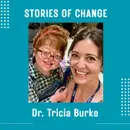
Photo: Dr. Tricia Burke and her son, Charlie. Used with permission.
Stories of Change: Helping You Navigate What’s Next
Hosted by Judy Oskam
Navigating a change or wondering what comes next? Hear real stories from people who have faced unexpected turns and figured things out along the way.
A little wisdom to help you find your own way forward.
Explore more at StoriesofChangePodcast.com.
00:00 - Caregiving And Grief Series Setup
01:10 - The Invisible Labor Of Care
03:20 - Learning Medical Skills Overnight
06:38 - Finding Community And Practical Resources
11:40 - What Research Reveals About Grief
17:50 - Shattered Dreams From Birth To Dementia
20:30 - Turning Findings Into Better Care Systems
23:55 - Protecting Relationships And Staying Present
28:45 - Final Encouragement To Ask For Help
Caregiving And Grief Series Setup
Judy OskamCaregiving comes in all shapes and sizes. It might mean caring for an aging parent, supporting a family member through illness, or raising a child with major medical needs. I'm Judy Oskam, and this is Stories of Change, Helping You Navigate What's Next. This episode is part of a four-part series of finding your way forward, navigating grief and loss. In this episode, we're talking about caregiving, the challenges that come with it, and how we can better support those who care for others. My guest is Dr. Tricia Burke, a professor of communication studies at Texas State University. Tricia has firsthand experience of caring for herself, who has complex medical needs. That experience also shapes the questions she asks as a researcher. I wanted to explore caregiving through the lens of an experienced communication researcher who's also walked the walk. Here's my conversation with Dr. Tricia Burke.
Tricia Burke
The Invisible Labor Of Care
Tricia BurkeI study health in close relationships. And more recently, I have gotten into the topic of understanding caregiving in families and the conversations that caregivers have with close family members to support their caregiving efforts and to help them experience better outcomes and to help their family members experience better outcomes in the caregiving process.
Judy OskamI've just gone through with my mom passing away in September. And I tell you, those caregivers are angels who walk among us. I cannot say enough good things about caregivers.
Tricia BurkeYeah, it's a pretty hard job whether you are an informal family caregiver or you're a formal caregiver who's being paid for their service. It's a lot of emotional and physical labor and mental cognitive load that goes into the caregiving process, too.
Judy OskamWell, and that's a that's a great point too. You know, a lot of us might have been caregivers, but I'm thinking those people were caregivers. I was just the daughter who ended up being involved with the end-of-life process. And that's a whole different deal. Those levels of caregivers, right?
Tricia BurkeYes, but you were giving care also. I was don't try to sell yourself short on the caregiving. I think that's actually a good point that you bring that up because a lot of people don't think about themselves as caregivers because they're not employed to be caregivers, but you are a caregiver. You're providing care at the end of life, or in my case, I'm doing that with my child. Um, and that involves navigating insurance, making sure they have medical supplies, holding their hand, making a lot of tough choices, figuring out their medicines. Like there's lots and lots of stuff that goes into it that is caregiving, even though you're not being paid to give care.
Judy OskamRight.
Tricia BurkeAnd so I think that's an important thing to keep in mind that you are providing care. I really, I yeah, I totally totally hear you on that. And and I think the fact that I don't feel like I was trained in that area to be a caregiver,
Learning Medical Skills Overnight
Tricia BurkeJudy Oskam
but in your case, what what pushed you into that area of caregiving in sp in in particular?
Tricia BurkeSo when my son was born, we learned that he had a rare craniofacial syndrome and he was going to require more care than the typical child. And we were not prepared to be caregivers either. But two months of the song after he was born, we found out that he was going to need a G tube to feed to eat properly in order to get enough nutrition to grow. So all of a sudden, we were on the phone with medical suppliers, figuring out insurance, figuring out how to use a G tube and get him feeds through the pump. Um, and then a few months of the song after that, he had surgery on his skull to help with his brain growth and development. So then we were dealing with post-surgery recovery. Uh, he also, a few months of the song after that, had a severe respiratory infection. And all of a sudden, we found ourselves with oxygen at home that he needed at night when he was sleeping. Um, so there were a lot of skills we learned in the first year, in the first 18 months. I mean, he had a surgery where he had a post-op infection, and we went home with a pick line, which is basically like an IV directly to their heart, giving them antibiotics. And he was in our home. Well, we were in the hospital for three weeks, and then we were home for seven weeks with that. And we had a nurse coming in and helping us change out the IV. But I keep telling his doctors that I am the wrong kind of doctor, right? I got my PhD, but I don't know how to do these things. So we've had to really learn on the job and we've had no other choice because he's our child and we have to care for him. We want to care for him,
Judy Oskamright?
Tricia BurkeAnd so I think that whole experience of being like thrown into a situation that we were not expecting when everyone else I knew had healthy children, and none of them were going through the same things, it was really difficult. And it felt super isolating, and we were grieving the experience we thought we would have. And as a researcher, I looked to the literature to help me figure out what to do and how to cope and what was going on. And so much of the literature talked about the experience that you had, caring for a parent at the end of life or a spouse at the end of life, or um, you know, these kinds of situations. And very, very little research looked at how parents are coping with caring for their medically complex kids. And so then I said, okay, well, this is a gap I can fill. I can learn more about my experience from these other families, and hopefully I can find out what people are experiencing to share that information back with other families and help them when they're going through a time that feels very difficult and isolating. Um, so that's kind of where I, what my transition looked like.
Judy OskamWell, yes, and it was such a helpful area to look into because I'm sure when all of that happened to you, you said you looked for the literature, but we would go on Google and look for Everything we could to find out about how do I deal with these issues, and you didn't find much.
Finding Community And Practical Resources
Tricia BurkeYeah, there was not much available to me. I read a book about caregiving. It was a woman who wrote about caring for her spouse with cancer. Um, and I read, you know, I try to stay off Facebook groups, honestly, because I feel like there's a mix of things I don't want to know about in there. So some parents find those to be really helpful. That's not a resource that I wanted to use. I reached out to the parent-to-parent connection organization in my state where they connected me with another parent who had a child with a G tube. So I could, we could share resources and experience and stories. And in that connection, I found that I had someone who understand what I was going through. Um, and you know, we don't necessarily have to have kids with the same diagnosis to understand each other's circumstances. And so I realized like the importance of making connections with other people who were going through similar things as me. And that's when I started reaching out to other people about their caregiving experiences, interviewing them, learning about their experiences, and then changing my research path to examine them and try to better understand what these family members are going through, many of whom were not expecting to provide this kind of care.
Judy OskamYeah.
Tricia BurkeRight. So I think that's the difference is when you're caring for your parent at the end of life,
Judy Oskamyou know where it's
Speaker 1like,
Judy Oskamyou kind of expect
Tricia Burkethat to happen, right? And you know that this is the trajectory. For most people, when you're having a child or adopting a child or whatever, you're expecting them to be healthy. And then when they have a situation where they're not healthy and you're met with these extra responsibilities, it really changes your expectations about what parenting is and it changes your approach completely. And to be clear, this can happen to any parent, right? Like this happened to us at birth.
Judy OskamSure.
Tricia BurkeBut any child can get in an accident at some point and your trajectory changes. But that parent is still going through something that is not talked about very much in the literature. Even if their kid is 10 years old, when something happens, there still isn't very much attention given to how parents advocate for their kids, cope with their grief, get support from other people, speak with providers, coordinate all these services, manage their lives. A lot of parents have jobs. They're working full-time, they're they have other kids, they have other family members who might need help or care. So it is a really tricky time in life to be navigating all these different circumstances.
Judy OskamWell, and and when someone has faces that in their life, what for you would you recommend? What's the first step that they do?
Tricia BurkeThe first step that they should take is to find the parent advocacy organization in their state. And they will help you figure out the resources that are available to you. If you need to get signed up for early intervention, if you need a parent-to-parent connection, what exactly you need to do to make sure you're getting the resources that will help you make sure your child is meeting milestones and thriving to the best of their ability. Those connections will also help you feel like you have someone else who understands. A lot of times the caregivers they connect you with know other people too who might be going through something similar. So it kind of snowballs from there. And then you feel like you have a sense of community. It's less isolating. There's also a great podcast called The Rare Life. And they have, I don't know, a couple hundred episodes at this point. And they have a lot of episodes about family stories. So you feel like you can connect with these other family members and hear the things they've gone through. They also have episodes on getting support and communicating with others, advocating for your child. It's a really, really amazing resource. And they have a community on Instagram of sharing resources, sharing experiences. So I think that's an excellent resource for people who are feeling alone. And then I think the other thing is, and everyone tells you to do this, but just trying to find a little time for yourself so that you have a little piece of yourself. And that can be a difficult thing to do. But even if it's an evening where you get to go out and have dinner and get dressed up in your clothes and get out of your sweatpants and like enjoy some time if you have someone who can help you, even if it's in your house, if you find it hard to get away, but you can go to a separate place and have a conversation with your partner or go for a walk around your neighborhood, or whatever it is that you feel like is going to make you feel like you have a little a piece of yourself when you're going through such a tricky transition.
Judy OskamWell,
What Research Reveals About Grief
Judy Oskamand and um, you know, you mentioned the podcast. You've done some research on that podcast, right? Yes. So what did you find were the key trends? Uh I read some of your report on that.
Tricia BurkeYeah, we um so I started listening to that podcast during a particularly difficult time in the hospital. And I was feeling we were having a very hard time, and I was feeling very alone. And I started listening to the podcasts and the stories, and it made a big difference in my perspective. And of the song after we got out of the hospital and I was still listening to the podcast, I thought to myself, oh my gosh, these stories are so rich, and the transcripts are online. Like, why not use them and and figure out what's going on? And so in the first podcast, we the first art, the our first article, sorry, the first one that we did with transcripts from this podcast, we looked at the different stages that parents go through in recognizing their grief and figuring out how to cope with it and move past it. And so we learned that parents are they sometimes are shocked in the beginning and they're just like trying to take action as quickly as they can, or they're kind of like in this space where they're just moving without really thinking about what they're doing. They're in survival mode.
Judy OskamYeah.
Tricia BurkeAnd then they kind of settle into their reality and their responsibilities and they start to figure out how to work through all of those things and make plans and figure out their new normal. And then they really move to this phase where they have made sense of their experience and they reframe it as wow, I'm so lucky that I've gotten to learn from my child. My child is an inspiration, you know, all these types of things where you refocus and reframe. And in the second article, we looked at a different set of transcripts from the podcast where we identified the different work that family members are doing as caregivers. So, identity work, where they're managing their identity relative to their caregiving responsibilities, as well as communication work, where they're talking about the different ways that they have to use communication to do all of this work to manage their child's well-being. And so I think together, these different studies really show that it is a process that is not linear. And there's all different stages that parents go through, and things can set them back and trigger them and move them back a couple stages. And also throughout this whole process, there is a lot of work involved in terms of the way that parents see themselves, the way that they're managing communication with other people in their network, the way they're talking to providers, the way that they're negotiating support and their stress in their in their circumstance. And all that work is really, you know, extra invisible labor on top of the caregiving work that they're already doing. So I think that's kind of what we uncovered in those different articles. Uh, yeah, in those different articles.
Judy OskamSo was it was it helpful for you to read those? I'm sure it must have been. Kind of gives you more of a roadmap of what's coming next.
Tricia BurkeIt was helpful for me to read them in the sense that I feel like other people are going through things that are similar than my life, similar to my life. Um it is also very emotionally taxing to read through them. So I found that it took me longer to code them than my co-authors because to me it means something different. When they're describing how they walk down the TikTok hallway, the pediatric intensive care unit, and they know that they're having the worst day in that hallway. I know what that means, but my co-authors don't,
Judy Oskamright?
Tricia BurkeSo I think for me, it is helpful because you can see that you're not alone, but it is very emotionally exhausting and taxing in a different way than it is to people who have not gone through this experience themselves.
Judy OskamDoes that make the research more rich and valued? To me, as the reader, knowing that, I know that you have walked the walk, so to speak. I mean, to me, that's that's the best research to read.
Tricia BurkeI hope so. I think that I relied a lot on my co-authors who haven't had the same experience as me to make sure that we were presenting a story that was holistic and balanced. But I think that in some cases, as we're reading through the transcripts and selecting different exemplars to show people's experiences, I would be like, no, this is the one we have to use, right? Because I would I just knew like this is depicting this experience the the most accurately, the best, like providing the richest glimpse of what people are going through. So in that sense, I would say yes, but I tr really did try to keep it balanced. Oh, I know. Well, that's ethically,
Judy Oskamthat's the way you roll. I get that from a researcher standpoint, but I just think it's so like you know, Maureen Keeley's book. I mean, reading her book when I was going through some things with my dad, that was super helpful for me because I knew she had been there and she spoke in that's the way her words hit me from someone who had been there and done the research and could show all of the data, you know, it was a data-informed read for me. You know,
Tricia Burkeyes, it's an and multiple levels of expertise.
Judy OskamYes, exactly, exactly, exactly.
Speaker 1Yeah,
Judy Oskamoh my gosh. Well, has there have there been any surprises in your research uh as you've gone through this
Shattered Dreams From Birth To Dementia
Judy Oskamfor you personally? Because I wonder you could have gone the other way and not wanted to really live in that world, your professional world.
Tricia BurkeI think some of the surprises that I've had are, well, the first one is when I was talking with my friend Amanda, she does dementia caregiving
Judy Oskamresearch.
Tricia BurkeAnd as we were having a conversation about caregiving, we realized that even though parent caregiving and dementia caregiving are different experiences because ones that you know early in earlier stage of life and ones at the end of life, there was so much overlap between the ways that the caregivers were talking. And I thought that was really interesting. And so that's why we did that other study on um caregiving at different ends of the lifespan and looking at the frames that people use to understand their experiences. So there's this idea in the grief and caregiving literature um called the shattered dreams. And so basically, in the child caregiving context, the shattered dreams apply to the fact that you're not necessarily going to get to have the child relationship with your child that you envision, the parenting experience that you envisioned. And with the dementia context, it was more like you have this experience with your parent and or your spouse, and you don't get they don't get to have the end of life that you necessarily wanted for them. And um you are losing a little bit of them every day. So it's kind of a different thing. Like your dreams are being shattered because you're losing them like piece by piece, and it's like so heartbreaking to go through that. And for the parent caregivers, it's like you had these expectations that you're losing. So at both ends of the lifespan, you still have the same thing happening, but it's just happening in very different ways.
Judy OskamUm,
Tricia Burkeand I thought that was really profound, and I loved doing that work with her and seeing the similarity as well as these contrasting experiences that emerged. Um and the other thing that's been really surprising for me and so meaningful is that I've been able to find a lot of ways to translate this work back to people, back to caregivers.
Judy OskamYes.
Tricia BurkeAnd so that was my goal when I started, but I feel like that's the goal a lot of times for researchers, and it doesn't always work out that
Turning Findings Into Better Care Systems
Tricia Burkeway.
Judy OskamRight.
Tricia BurkeUm, but I have been volunteering on the family advisory committee at the hospital where my son receives his care. And so I've gotten to be involved in those advisory committee meetings where we've actually brought changes to the hospital, and some of that is informed by the research.
Judy OskamI
Tricia Burketold them about when they're communicating with patients, they need to understand that parents are going through grief at all these different processes. And so even something that seems very routine to them can feel like a huge setback to families, and they need to consider that when they're communicating with families. We also talked about like coordinating care and considering the whole child, like all these things that parents have brought up in my interviews, I've translated directly back in those advisory committees. And they include executives, they include family experienced people. Like these people are communicating back to the providers. I also started doing presentations with providers at the hospital and sharing tips for providers to be effective, you know, caregivers at the hospital when they're speaking with patients and families. And I work on the Pediatric Experience Collaborative too, doing some work with them on their communication and education team, where we're trying to develop a resource that multiple hospitals can share, a library where they can look at different things, as well as publishing work that's gonna get back out. And to an academic audience, and then hopefully again cycle back to make a difference in people's lives. So I've been trying to find ways to do this. Oh, I also volunteer at the parent advocacy organization where I initially had my first connection. Now I serve as a parent connection to other people.
Judy OskamAnd I bet that's so meaningful when you get up there and tell your story, and the parents are like, oh, this is great. This is such a connection, you know?
Tricia BurkeYeah, I do. It's wonderful to make those connections with parents. Yesterday I presented at a university class about for special ed students who are trying to learn about the IEP process, the individualized education program. Um and so I got to share my story dealing with my son and his IEP and how I manage that. And it's impacting the way that those educators are going to think about caring working with these kids in schools too. And some of that is not just based on my own experience, it's based on what I've learned from these families.
Judy OskamSure. So I really
Tricia Burkeam trying to find all kinds of ways to get this information back out to the community. And it has been surprising that it's been working pretty well and that it's been well
Judy Oskamreceived. Well received, I bet. Oh my gosh. Yeah.
Tricia BurkeOh my gosh. Well, and I mean, I just think I think we have to kind of take every story we get and turn it into a learning growth opportunity. And I think that's sort of your nature as a scholar and a you know, communications uh teacher as well. So I think that's all part of it. But I mean, so the next phase of your research, I mean, I think too, when you look at this level, you've got all the people that are connected with the caregiver too, because it didn't change just you, it changed you, the relationship with your husband, your family, everybody. That's a whole other area,
Protecting Relationships And Staying Present
Judy Oskamright?
Tricia BurkeYeah, that is actually too the one the thing that I want to start looking at next
Judy Oskamis
Tricia Burkehow people manage these circumstances more broadly with their families. So, how my partner and I make choices, what information we decide to share with our the grandparents and the sibling, you know, other people in our family, and when we want to share that information and what exactly we want to share. You know, our son has some pretty significant procedures that are going to be coming up in the next few years, and he's not ready to hear that information yet. I'm like in denial that it's even gonna happen. And so I think that, you know, figuring out how we've how we process it, how we help him, how we communicate with family members, how we make those choices together. And all of that is going to be very important. And this is really stressful on relationships. You know, relationships with kids are hard enough. And then you
Judy Oskamhave
Tricia Burkea relationship with the kid who requires a lot more. And unfortunately, a lot of parent caregivers end up in divorce, you know, because I've read that they just can't cope with all of the extra pressure and stress and conflict, you know. So I think figuring out ways to make people turn towards each other or help people turn towards each other instead of a way, help them communicate through the stress instead of letting the stress drive their communication. So learning more about people's experiences and then providing resources about how to manage these conversations, decisions, stressful circumstances better. That's the next thing that I think is really important to tackle.
Judy OskamWell, and and looking at your your life over the last several years, how much do you now? I mean, how do you or do you, maybe the question is, do you how do you find ways to live in the moment? How do you find ways to appreciate where you are at the moment? Or do you?
Tricia BurkeOh, for sure. You have to. I mean, that's what you do in this life as you celebrate every little win that you have, and you try not to think about all the things that could go wrong or all the things that are up ahead, right? So, um, you know, if I'll give you an example. Charlie has three blue lights that he got from his teacher this week at school. And that means that he's been having a fantastic week all week this week. And I'm like, Charlie, good for you. I'm so proud of you. You're doing awesome, right? He got a math test home that he did really well on. He used his words last night when he was mad at his brother instead of just like having a big old crazy meltdown, right? So I try to celebrate these things. I try to sit back and reflect on the fact that we're in a pretty good phase at the moment and just enjoy the fact that Thanksgiving's coming up and we're gonna get to like sit around the table and everyone's gonna eat turkey and pie, and we don't have to use a pump. And, you know, he can run outside and play and be strong and be happy and just enjoy the awesome time that we're having at this moment. Yes, we're for sure, for sure doing that.
Judy OskamBut that was that's a conscious decision on your part.
Tricia BurkeYes. Yes, because I could very easily get into the weeds of I have all these appointments to make, I have these prescriptions to get, I have this medical supplier to call, which I'm gonna do as soon as we hang up. I have like we have these other procedures coming up, right? And I'm choosing to not focus on those, to come up, compartmentalize them, put them away in a different spot in my brain, and just focus on the funny joke he told me this morning, you know, and the silly faces that he makes and how he wakes up and gives his brother a big hug right away. Like these are the things that are making every day feel good and feel manageable. And I'm so proud of how far he has come and how far we have all come. And so I'm trying to make that the focus and not worry so much daily about all the other things. But obviously, those things will come up and we'll have to deal with them when they do. And so I think that's that's the challenge. There's always like a balance of how much to think about those things and how much to just be in the moment and enjoy the good times.
Final Encouragement To Ask For Help
Judy OskamYeah. Well, I'm I'm so thankful that you are doing this line of research because I know it helps so many others. Do you have any last words for listeners that might be going through this with their child or a loved one where they are the major caretaker and they didn't expect to be?
Tricia BurkeYeah. I mean, I would just say that it is a hard situation, and it's okay to feel like it's hard. It's okay to feel whatever you're feeling. I remember feeling really guilty that I was feeling so much grief in the beginning because I thought I have this baby, he's alive, he's mine, I'm supposed to be so happy and like overjoyed. And I was just so focused on losing the experience I thought we were gonna have, and so worried, like just drowning in uncertainty. And then feeling really guilty for that, right? And I think just if that's what you're feeling, then it's okay. Feel those things and don't be worried about feeling another way instead. And try to find a way to help yourself get through those feelings so that you can come out the other side to where you've made peace with it, and you now see all of the wonderful things about your experience, and you're able to reframe and accept and enjoy your circumstances. And sometimes that means looking for the resources online, like the connections and the um agencies that can help you with the resources you need. Sometimes that means looking for groups online or listening to the podcast and just feeling like a sense of community. And so doing whatever you can do to help yourself feel at peace and um give yourself the tools you need to cope with it and feel feel better.
Judy OskamI love that. Trisha, thank you so much. Thanks for sharing.
Tricia BurkeYeah, of course. Thank you. I'm so glad to be here today in such good company with the other awesome people that you interviewed.
Judy OskamThat's right. I appreciate you. Thank you so much.
Tricia BurkeThank you.
Judy OskamI love Tricia's attitude, spirit, and expertise. Her research will certainly make an impact, and that will help so many people and organizations. If you're caring for someone you love, take a minute and think about Everything you're handling. Is there something that someone else could help you with? Maybe it's making a phone call, an appointment, or running an errand. Don't be afraid to ask for that help and seek resources. This conversation is part of finding your way forward, navigating grief and loss, a four part series on stories of change. I'm Judy Oskam Thanks for listening.